How to Read a Yarn Label: Every Symbol, Decoded
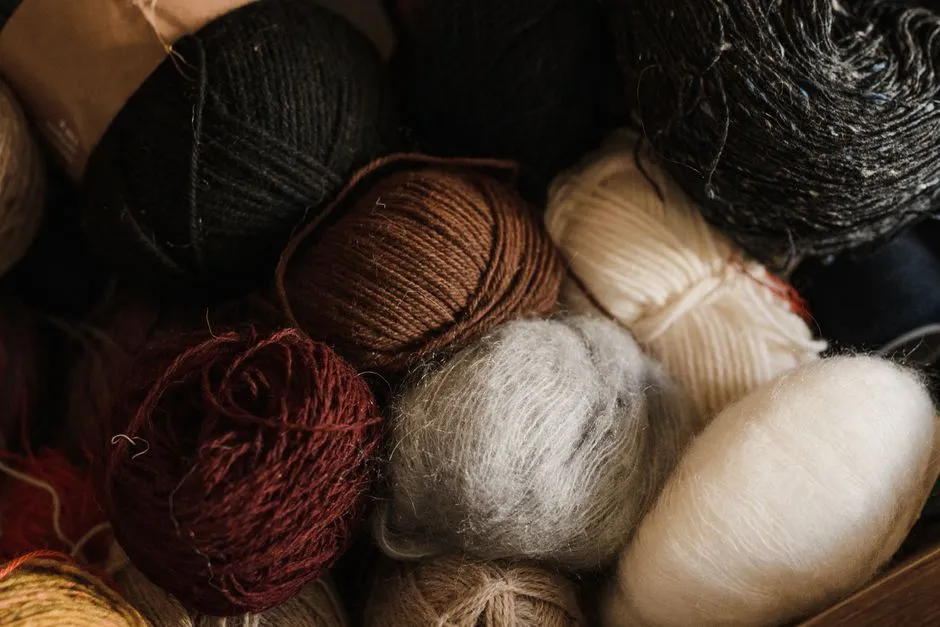
What's Actually Printed on That Little Paper Band
Every skein or ball of yarn is wrapped in a label — often called a ball band — that packs in everything you need to buy the right amount, use the right needles, and care for the finished piece correctly. Once you know where to look, reading one takes about ten seconds. Here's every element, in the order it usually appears, and what to do with it.
Fiber Content
This line tells you what the yarn is made of, listed by percentage: "100% Merino Wool," "55% Cotton / 45% Acrylic," and so on. Fiber content drives almost everything else about how the yarn behaves — its warmth, drape, elasticity, and how you'll need to wash it later.
A few things worth knowing as you read this line:
- Wool is the elastic one. Its crimped, heavily scaled fibers spring back after stretching, which is why ribbing holds its shape and why wool forgives uneven tension. Those same scales interlock permanently under agitation, so untreated wool felts — friction is the main driver, and heat or a sudden temperature change speeds it up.
- Superwash wool has been treated (scales smoothed or coated) so it can go in a washing machine on a gentle cycle. It's usually noted right on the label, since it's a selling point. The trade-off: superwash yarns have less grip and often grow a little more in length than untreated wool.
- Alpaca and mohair behave nothing like wool despite sharing the "animal fiber" bucket. Both are low-crimp with shallow, smooth scales, so they have almost no memory — the standard shorthand is that alpaca has no bounce. That means liquid drape and serious warmth for the weight, but also garments that grow and sag if you knit them loosely or hang them wet. Mohair adds a halo, the fuzzy fringe of fibers that blurs stitch definition. Both shed, and both felt far less readily than wool, for the same reason they lack spring: fewer scales to interlock.
- Cashmere is warm and extraordinarily soft but noticeably less elastic than wool, and it pills. Small percentages in a blend add softness without giving up the wool's structure.
- Plant fibers (cotton, linen) are cool-wearing and durable but have essentially no stretch — a cotton sweater won't snap back the way a wool one does, and it gets heavier as it grows.
- Acrylic and other synthetics are budget-friendly and machine washable, but genuinely heat-sensitive. Use a low iron setting or a pressing cloth, and keep them out of a hot dryer. At a cotton-setting iron temperature, acrylic permanently flattens, glazes, and can fuse into a stiff sheet. The change is not reversible.
If you're weighing wool against acrylic for a specific project, our wool vs acrylic yarn comparison breaks down when each one earns its keep.
The Weight Category Number (0–7)
Somewhere on the label, usually inside a small skein-shaped icon, you'll find a number from 0 to 7. This is the yarn's position on the Craft Yarn Council's Standard Yarn Weight System, and it's the fastest way to know whether a yarn will work for your pattern:
| Number | Category name | Typical use |
|---|---|---|
| 0 | Lace | Shawls, doilies, fine lace work |
| 1 | Super Fine (Fingering/Sock) | Socks, baby items, lightweight shawls |
| 2 | Fine (Sport) | Light garments, baby items |
| 3 | Light (DK) | Sweaters, lightweight accessories |
| 4 | Medium (Worsted/Aran) | Sweaters, blankets, hats — the most common weight |
| 5 | Bulky (Chunky) | Heavy sweaters, outerwear, quick projects |
| 6 | Super Bulky | Thick scarves, weekend projects |
| 7 | Jumbo | Arm knitting, statement throws |
This number is what most patterns mean when they call for "worsted weight" or "DK yarn." If the label's weight category doesn't match the pattern's, don't guess — swap to a yarn with the same number, or you risk running out of yarn or ending up with the wrong finished size. For the full picture of how each weight behaves and where the "worsted vs aran" naming gets confusing, see our yarn weight chart guide.
Weight and Yardage
Two numbers, usually paired: the physical weight of the ball (in grams and/or ounces) and its length (in yards and/or meters). Both matter, because yarn density varies — a lofty bulky yarn and a dense worsted yarn can weigh the same 100 grams while offering very different yardage.
Yardage per 100g is a useful sanity check on the weight category, since a thinner yarn packs more length into the same mass. Rough ranges:
| Weight | Approximate yards per 100g |
|---|---|
| Fingering (1) | 380–460 |
| Sport (2) | 300–350 |
| DK (3) | 230–270 |
| Worsted (4) | 190–220 |
| Aran (4–5) | 160–190 |
| Bulky (5) | 100–150 |
| Super Bulky (6) | 50–100 |
These are ranges, not rules — an airy woolen-spun yarn sits at the high end for its category, a tightly plied or cotton yarn at the low end, since cotton is denser than wool. But if a ball claims DK and gives you 190 yards per 100g, it will very likely knit like a worsted.
When you're calculating how much to buy, shop by yardage, not ball count or gram weight, since two brands at the same 100g can differ in length by a wide margin. Convert the pattern's total to your yarn's yardage, then round up to a whole skein — always up. Partial-skein math fails in practice: stated yardage carries real tolerance, your gauge probably isn't exactly the pattern's, and yarn that runs out three yards short of a bind-off costs you a full extra skein anyway, possibly from a different dye lot. Our yardage-by-project guide has typical totals if you're working without a pattern.
Gauge (Tension) Information
This is usually shown as a small grid icon with numbers like "18 sts / 24 rows = 4 in (10 cm)" alongside a recommended needle size. It tells you how many stitches and rows the yarn produces at a standard tension on that needle, using stockinette stitch as the default unless stated otherwise.
Two things this number is not. It isn't your gauge — it's the manufacturer's, knit by someone whose tension may be nothing like yours, which is why every pattern worth following asks you to swatch first. And it isn't necessarily your pattern's gauge either: patterns often deliberately call for a denser or looser fabric than the label suggests, especially for socks and colorwork. Our gauge guide walks through measuring your own swatch and adjusting needle size until it matches.
Recommended Needle and Hook Size
Most labels list a suggested needle size (and often a crochet hook size too), typically in both US and metric. These recommendations line up with the weight category:
| Weight category | US needle size | Metric (mm) |
|---|---|---|
| Lace (0) | 000–1 | 1.5–2.25mm |
| Fingering (1) | 1–3 | 2.25–3.25mm |
| Sport (2) | 3–5 | 3.25–3.75mm |
| DK (3) | 5–7 | 3.75–4.5mm |
| Worsted (4) | 7–9 | 4.5–5.5mm |
| Bulky (5) | 9–11 | 5.5–8mm |
| Super Bulky (6) | 11–17 | 8–12.75mm |
| Jumbo (7) | 17 and up | 12.75mm and up |
For example, a worsted weight (4) label recommending "US 8 (5.0mm)" is right in that band. If your swatch comes out too loose, size down; too tight, size up. Trust the millimeter figure over the US number, since a "US 8" from two brands can differ by a fraction of a millimeter.
Dye Lot Number
A dye lot (or "lot" or "dyelot") is a batch number assigned when a group of skeins was dyed together. Because dyeing is never perfectly identical batch to batch, skeins from different lots — even in the exact same colorway — can show a visible shift in shade once knitted up side by side.
Buy all the yarn for one project from the same dye lot, and buy slightly more than your yardage math suggests, since matching a lot later isn't guaranteed. Undyed naturals are less likely to show lot variation, but it's still worth checking. If you do end up with two lots, alternate two rows from each skein across the transition — the shift becomes a gradient instead of a line.
Color Name and Number
Separate from the dye lot, this identifies the colorway itself — sometimes a name ("Harvest Gold"), sometimes a number, often both. Colorway names aren't standardized in any way, so "Slate" from one brand tells you nothing about "Slate" from another.
Write it down, or photograph the band, if there's any chance you'll want more later for a repair or a matching accessory; matching a shade from memory or from a monitor is unreliable. Note too whether the label calls the yarn heathered, tonal, or hand-dyed — those words predict how much variation you'll see within a single skein, which is a separate question from lot-to-lot variation.
Care Symbols, Decoded
Care instructions appear as small icons, sometimes with a short text line as backup. They come from the standardized textile care symbol systems used on clothing tags — with one catch: the US (ASTM) and European (GINETEX/ISO) sets aren't identical. The washtub, triangle, square, iron, and circle shapes are shared, but the US set leans on dots for temperature while European labels usually print a number in Celsius, and the dry-cleaning circle carries different letter codes. On imported yarn, expect the European variant.
| Symbol | Meaning |
|---|---|
| Washtub | Wash. A number inside is the max temperature in Celsius; dots say the same thing — one = 30°C, two = 40°C, three = 50°C, four = 60°C. A bar underneath means gentle cycle, two bars very gentle. An X means do not wash. |
| Hand in a tub | Hand wash only, no machine agitation, water 40°C or cooler. |
| Plain triangle | Bleach allowed, including chlorine bleach. |
| Triangle with two diagonal lines | Non-chlorine (oxygen) bleach only — the variant most likely to appear on a ball band. |
| Crossed-out triangle | Do not bleach. |
| Square with a circle | Tumble dry allowed; dots inside indicate heat (one = low, two = normal). An X means air dry only; a square with a horizontal line means dry flat. |
| Flat iron | Ironing allowed; dots indicate heat — one = low, about 110°C, for synthetics; two = medium, about 150°C, for wool and silk; three = high, about 200°C, for cotton and linen. An X means do not iron. |
| Circle | Dry clean; letters inside tell the cleaner which solvent. An X means do not dry clean. |
For wool and other animal fibers, the safe default — even when a label is ambiguous — is a cold hand wash with no wringing or agitation. Agitation is what felts wool: rubbing, wringing, and machine action interlock the scales, and heat or a sudden shift between hot and cold water accelerates it. Cool water alone doesn't make wool safe if you scrub it. Support the wet garment's full weight when you lift it, press water out in a towel, and dry flat — especially for alpaca blends, where anything hung wet will stretch and stay stretched. Our guide to washing wool sweaters without shrinking them covers the full process step by step.
Putting It All Together
Picture a label reading: "100% Superwash Merino Wool, 100g / 246 yds, Weight: 3 (Light/DK), Gauge: 22 sts x 30 rows = 4in on US 6 (4.0mm), Dye Lot: 4471, Color: 09 Slate." Here's what that tells you before you even swatch: 246 yards per 100g lands squarely in DK territory, confirming the stated category; the superwash treatment means a gentle machine wash is fine but the fabric may grow slightly in length; US 6 is the manufacturer's starting point for that gauge; and every ball needs to say "Lot 4471."
Keep at least one label per project until it's finished and washed once — it's the fastest reference if you need to buy more yarn, troubleshoot a gauge mismatch, or double-check care instructions before that first wash.