Wood vs Metal Knitting Needles: Which Knits Better?
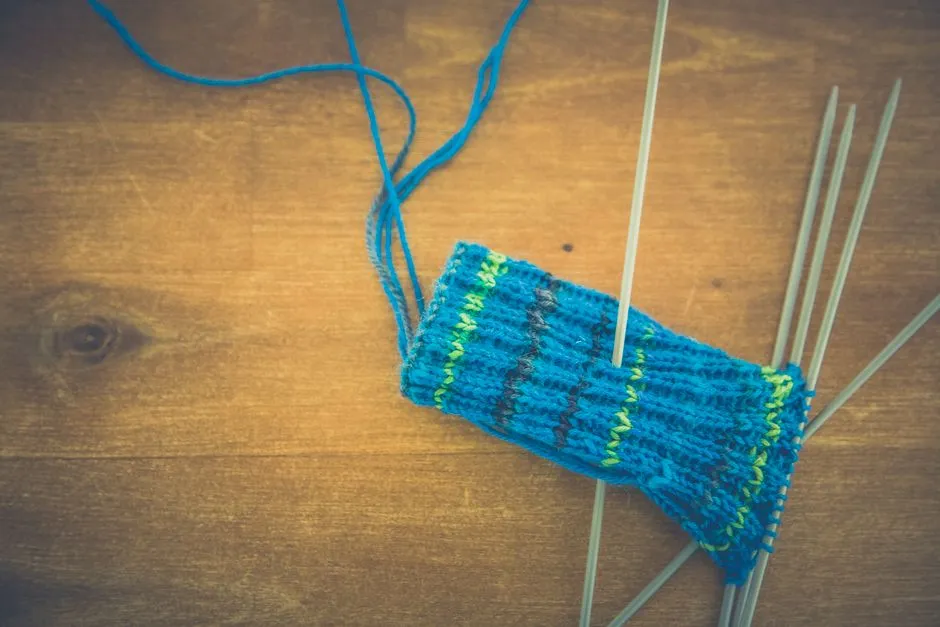
- Are wood or metal knitting needles better?
- Wood vs. metal at a glance
- What actually changes when you switch materials?
- Run a same-yarn needle test before buying a set
- Wood and bamboo: where they help
- Metal: where it helps
- Nickel, stainless steel, brass, and aluminium
- Where carbon fibre fits
- Does needle format change the answer?
- Match the first test to the project
- The bottom line
- Sources
Are wood or metal knitting needles better?
Neither material is universally better. Wood and bamboo usually offer more surface resistance, which can help keep slippery stitches on the needle. Polished metal usually lets stitches travel more freely and can suit a knitter who wants less drag. But finish, point shape, cable join, needle format, yarn, gauge, and your own tension can matter as much as the material name.
The useful answer is not “wood for beginners, metal for experts.” It is: choose a likely match, then knit the same small test with both materials before buying a full set.
Wood vs. metal at a glance
| Decision | Wood or bamboo is the stronger starting test | Metal is the stronger starting test | What can overturn the choice |
|---|---|---|---|
| Stitches keep escaping | More surface resistance may help | A matte or structured metal may still work | Tip taper, yarn finish, tension |
| Yarn drags along the shaft | A highly polished wood may work | Smooth metal often reduces drag | Joins and surface treatment |
| Lace or frequent decreases | A tapered wood point can work | Precisely machined lace tips are widely available | The exact model, not material alone |
| Four or five DPNs feel precarious | Extra grip can hold resting stitches | Metal can help sticky yarn move | Needle length and end control |
| Large needles feel tiring | Many wood needles are light | Hollow metal can also be light | Actual pair weight and balance |
| Quiet shared room | Wood or bamboo is usually quieter | Coated or structured metal may soften sound | Knitting style and contact force |
| Nickel concern | Wood avoids a metal shaft | Verified nickel-free or maker-described suitable metal | Joins and coatings must also be checked |
These are test directions, not guarantees. “Wood” includes bamboo, birch, laminated woods, and different polishes. “Metal” includes stainless steel, brass with a finish, and aluminium. A rough join can catch yarn on either material, and a sharply tapered bamboo point can be more precise than a blunt metal one.
What actually changes when you switch materials?
Surface resistance
The live guide called wood “grippy” and metal “slick.” That is a useful shorthand, but it is not a complete classification. Clover describes its current Pro Takumi bamboo as carefully polished for glide while retaining a natural texture. ChiaoGoo describes its stainless-steel circulars as having a smooth satin finish. Addi also sells structured metal needles as well as smooth ones.
So compare the exact surfaces. More resistance can steady loose or slippery stitches; less resistance can reduce the effort of moving a grippy yarn. Too much of either creates its own problem: unwanted slipping at one end, or constant pushing at the other.
Point and join
Material does not determine point shape by itself. Clover advertises tapered bamboo tips on Pro Takumi. ChiaoGoo describes precisely machined stainless-steel lace tips. The right question is whether the point enters the stitches you are making without splitting the yarn, not whether a buying guide has assigned “sharp” to all metal and “blunt” to all wood.
On circular needles, inspect the transition from shaft to cable. A snagging join can erase the advantage of a smooth shaft. This is why format belongs in the decision; circular versus straight needles covers the larger choice.
Stiffness, flex, weight, and temperature
Bamboo commonly has some flex, while metal products are often more rigid. Yet diameter and construction change the feel. ChiaoGoo describes its stainless tips as lightweight and strong, and KnitPro says larger metal needles can be made from hollow pipes to limit excess weight. The old rule that metal becomes uncomfortably heavy around US 11/8 mm is therefore not universal. Weigh or handle the actual pair.
Wood often feels warmer at first contact and makes less click than bare metal. Whether that matters after ten minutes is personal. Do not buy a full interchangeable system because a material sounds comfortable in theory; borrow or buy one fixed circular first.
Run a same-yarn needle test before buying a set
This is the substantive test most comparisons skip. Use the same yarn, nominal needle diameter, stitch pattern, seat, and session length for both materials.
- Cast on 20 stitches with one pair and work 20 rows, or enough to settle into your normal rhythm.
- Record dropped stitches, split stitches, how often you pushed stitches along the shaft, and any snag at the join.
- Note whether your hands tightened, loosened, or changed grip. Stop if knitting causes pain, numbness, weakness, or persistent skin irritation; tool choice is not medical treatment.
- Repeat with the other material, using a fresh section of the same yarn.
- Wash or block both samples as the project requires, then compare stitch gauge, row gauge, surface, and drape.
Twenty stitches and 20 rows are an editorial comparison size, not a universal gauge-swatch prescription. For a fitted project, follow the pattern’s swatch instructions. The Craft Yarn Council recommends using the actual yarn, needles, and stitch pattern, then changing needle size if needed to obtain the specified gauge. Material can change how you handle the yarn, so a nominally identical diameter does not excuse a new swatch.
Score each test from 0 to 2 on control, flow, point entry, join, hand comfort, and fabric result. Zero means the pair interfered, 1 means acceptable, and 2 means easy. The total does not crown a universal winner; it tells you which exact pair fits this exact project.
Wood and bamboo: where they help
Wood or bamboo is a sensible first test when stitches slide off during pauses, when several double-pointed needles are in play, or when hard clicking is unwelcome. The slight resistance of many models can make a slippery silk blend, mercerized cotton, smooth superwash wool, or smooth alpaca easier to park between rows.
The live page said wood is automatically better for beginners. Clover does describe its Takumi bamboo as flexible and easy for beginners, but that is a manufacturer statement about its own product. Some beginners prefer a smoother needle because they pull yarn tightly. Control the recommendation: start with bamboo if stitches escape; test metal if every stitch must be shoved.
The old page also said wood tips are typically rounder and that all thin wood below roughly US 2/2.75 mm is more prone to snapping. Current products show why that cutoff is too blunt. Clover’s Pro Takumi page says its US 0-2/2.00-2.75 mm circular shafts use only metal fittings at the joints because they are thin, but that construction detail is not a universal breaking threshold for every wood needle. Protect thin needles from bending and inspect them for cracks or burrs regardless of brand.
With grippy non-superwash wool, mohair, brushed alpaca, or suri alpaca, a textured wood shaft may create more drag than you want. But finish wins over animal name: a polished wood pair may still flow, and a structured metal pair may not.
Metal: where it helps
Metal is a sensible first test when yarn stalls on the shaft, when repeated plain stitches feel laborious, or when you need a precisely tapered point for lace, cables, decreases, or picking up stitches. Addi describes current metal needles in white-bronzed brass, steel, and anodised aluminium, with models ranging from 1.5 mm to 15 mm. ChiaoGoo’s stainless RED Lace range runs from US 000/1.50 mm through US 15/10 mm in its 16-inch line.
Those ranges demonstrate availability, not that metal is always faster or more durable for every knitter. The old page promised faster rows, decade-long service, smoother joins over time, and resistance to nearly every kind of wear. Those outcomes depend on model, construction, treatment, storage, and use. A product warranty or disclosed material is stronger evidence than a material-wide lifespan promise.
Slippery yarn can move too freely on a polished metal shaft. Smooth alpaca has little elasticity and can feel less secure than a haloed alpaca yarn; silk blends and some mercerized cottons or superwash wools may behave similarly. Start with fewer live stitches or a less slick surface if stitches keep escaping.
Nickel, stainless steel, brass, and aluminium
Do not treat “metal” as one formula.
- Stainless steel: ChiaoGoo says its current surgical-stainless TWIST and RED products are user-friendly for knitters sensitive to nickel. That statement belongs to those products, not every stainless alloy or join.
- Finished brass: Addi says it has used white bronze rather than nickel in its plating since 2016. Other brass needles may use different coatings, so read the maker’s current material declaration.
- Aluminium: It can reduce weight in larger diameters, but anodised, painted, coated, and unfinished surfaces do not feel identical. Inspect the exact finish.
- Nickel-plated products: Nickel can cause allergic contact dermatitis in susceptible people. The American Academy of Dermatology recommends avoiding nickel-containing objects if you have a nickel allergy and seeing a board-certified dermatologist for a suspected allergy or a rash that blisters, becomes infected, or comes and goes.
The previous article said stainless steel was categorically “safer” for nickel sensitivity. That is too broad because metal composition and joins vary. Use a maker’s explicit nickel statement, and remember that a bamboo circular can still contain a metal join: ChiaoGoo, for example, says its fixed bamboo circulars at US 3/3.25 mm and above use a nickel-plated copper join.
Where carbon fibre fits
Carbon-fibre needles are a third route, not simply lighter metal. KnitPro says its Karbonz line uses carbon-fibre rods with finely honed brass-coated tips. The company describes the shafts as lightweight, flexible, and smooth. That exact construction preserves the live guide’s important nuance: when a carbon-fibre needle has a metal point, you are evaluating a composite tool rather than carbon against metal in isolation.
The old page said carbon fibre costs more and is preferred by some knitters with arthritis or hand fatigue. Price changes by product and retailer, and a manufacturer’s comfort language is not clinical evidence. Treat carbon fibre as another sample to compare. Persistent pain, swelling, numbness, weakness, or loss of function belongs with a qualified clinician, not a needle-shopping chart.
Does needle format change the answer?
Yes. With straight needles, shaft weight and end balance are prominent because the whole project can sit on the needles. With circulars, cable memory, join smoothness, tip length, and connection security can dominate. With double-pointed needles (DPNs), four or five points may be active, so surface resistance and needle length affect how securely resting stitches sit.
Many first-time sock or sleeve knitters find wood DPNs easier to control, but it is not a rule. A sticky yarn on a rough wood set can make every transfer cumbersome. Our magic loop versus DPNs guide handles the circumference method; material is a second decision.
For interchangeable needles, compare:
- the available tip lengths and diameters;
- whether the join catches the project yarn;
- cable lengths measured with the tips attached;
- how the connection is tightened;
- whether tips, cables, and connectors can be replaced individually;
- whether the wood and metal systems share cables.
ChiaoGoo’s current SPIN bamboo and TWIST stainless sets both offer 4-inch/10 cm and 5-inch/13 cm tips from US 2/2.75 mm to US 15/10 mm, but the included cables and their behavior differ. See the interchangeable needle guide before committing to a system.
Match the first test to the project
- Learning while stitches fall off: begin with wood or bamboo.
- Learning while tight stitches barely move: test smooth metal.
- Fast plain stockinette or garter: compare polished metal against polished wood; do not assume speed.
- Lace, cables, or frequent decreases: prioritize the exact tip geometry, then surface.
- Silk blends, some mercerized cottons, slick superwash, or smooth alpaca: start with the less slippery pair.
- Non-superwash wool, mohair, brushed alpaca, or suri alpaca: start with the smoother pair.
- A quiet shared space: compare sound with your actual knitting motion.
- US 11/8 mm and larger: compare actual weight and balance rather than material stereotypes.
Needle diameter still controls the fabric conversation. Use the knitting needle sizes chart for US-to-millimetre conversion, then swatch to the pattern’s required gauge. For a first project, pair the needle test with beginner-friendly yarn criteria.
The bottom line
Wood versus metal is not a personality quiz. Surface, point, join, construction, and your interaction with the yarn decide the result. Wood and bamboo are good first tests for runaway stitches and quiet control; metal is a good first test for excess drag and precise tip work. Buy one comparable pair in each material, knit the same yarn, measure the fabric, and let the project settle the argument.
Sources
- Clover, Circular Knitting Needles Pro Takumi — supports the current product’s polished bamboo surface, tapered tip, joint construction, and US 0-2 fitting detail. Accessed September 4, 2026.
- ChiaoGoo, Products — supports the stated stainless and bamboo ranges, constructions, tip lengths, cable distinctions, nickel-sensitivity wording, and bamboo-join detail. Accessed September 4, 2026.
- Addi, Knitting Needles and Nickel-Free Needles — support its current metal categories, diameter range, and manufacturer-specific white-bronze statement. Accessed September 4, 2026.
- KnitPro, Karbonz — supports the carbon-fibre shaft and brass-coated-tip construction described above. Accessed September 4, 2026.
- Craft Yarn Council, Reading Instructions and Other Basics — supports using the project yarn, needles, and stitch pattern for a gauge swatch and changing needle size when needed. Accessed September 4, 2026.
- American Academy of Dermatology, “Nickel allergy: How to avoid exposure and reduce symptoms” — supports nickel-contact avoidance and the dermatologist route stated above. Accessed September 4, 2026.