Best Yarn for Beginners: What to Buy First (and Skip)
- The Short Answer
- How We Evaluate Beginner Yarn
- Top Picks by Category
- Beginner Yarn at a Glance
- Weight Matters as Much as Fiber
- Color Choice Matters More Than People Expect
- Wool or Acrylic — Which Should You Actually Start With?
- What Else You'll Need Alongside Your First Yarn
- How Much to Buy for a First Project
- A Quick Shopping Checklist
- Bottom Line
The Short Answer
For a first project, reach for a smooth, light-to-medium colored, worsted-weight yarn in either a wool-acrylic blend or 100% acrylic. Worsted is forgiving to hold, easy to find in nearly every craft store, and thick enough that stitches are easy to see and count — which matters far more in month one than fiber prestige. Save mohair, boucle, self-striping sock yarn, and dark or heavily variegated colorways for after you've knit a few things and can already tell a knit stitch from a purl by feel.
Below is how we evaluate beginner yarn, five category picks with honest tradeoffs, and a rundown of what to leave on the shelf until your hands catch up with your ambition.
How We Evaluate Beginner Yarn
A yarn earns a beginner recommendation on five practical criteria, not brand reputation:
- Stitch visibility — can you actually see your knit and purl stitches to count and fix them?
- Splittiness — does the needle tip slide between plies instead of catching the yarn cleanly?
- Forgiveness — does it have enough elasticity to hide uneven tension while you're still finding a rhythm?
- Washability — can a first project survive a mistake-prone owner without special care?
- Cost per skein — is it cheap enough that ripping out and restarting doesn't sting?
Fiber content matters mainly because it drives these five things, not because one fiber is inherently "better." A yarn that scores well here lets a new knitter focus on tension and technique instead of fighting the materials.
Ply Count Matters Too
Look at the ball band or the twist of the strand itself: a multi-ply yarn (several thin strands twisted together, usually 3 or 4 ply for a worsted weight) tends to hold its shape better on the needle and split less than a single-ply yarn of the same weight, where the fibers are loosely twisted in one strand. Single-ply yarns can feel soft and look lovely, but that same loose twist is more prone to splitting under a needle tip and pilling with wear — another reason a straightforward multi-ply worsted is an easier first purchase than it might look on the shelf.
Top Picks by Category
Every pick below assumes a worsted or aran weight, which the Craft Yarn Council's ball-band system pairs with roughly US 7-9 needles (4.5-5.5mm). If you're unsure which needle to grab, US 8 (5.0mm) is the standard starting point for worsted — then adjust up or down based on what your swatch tells you.
Best Overall: Worsted-Weight Wool-Acrylic Blend
A wool-acrylic blend (commonly a 20-30% wool, 70-80% acrylic mix) tends to split less than pure acrylic while staying more washable and budget-friendly than pure wool. The wool content adds a small amount of grip and elasticity, which helps stitches sit evenly on the needle instead of sliding around. That grip also means a dropped stitch tends to sit still and wait for you rather than laddering three rows down before you notice it — a small mercy that matters a lot in the first few projects.
Worth knowing: blends vary a lot by manufacturer, so check the ball band for fiber percentage and washing instructions rather than assuming — even "wool blend" yarns range from machine-washable to hand-wash-only depending on whether the wool is superwash-treated. A blend with only a token amount of wool will behave much more like plain acrylic than the label's "wool" implies.
Best Budget Pick: 100% Acrylic Worsted
Plain acrylic worsted is inexpensive, machine washable, comes in a huge range of solid colors, and is sold at nearly every craft retailer, so restarting a swatch or an entire project costs little. It's a genuinely reasonable first yarn, not just a compromise. Economy skeins also tend to be generous, which means a single ball often carries a scarf-sized practice piece further than you'd expect.
Worth knowing: cheaper acrylics can feel squeaky or slightly stiff on the needles, and acrylic is a thermoplastic — too much heat melts and flattens the fibers permanently, and no amount of washing or reshaping brings that loft back. Wool behaves differently: a wool piece that has gone out of shape can usually be re-blocked (wet or with steam) and coaxed back, because the fiber has memory. What wool does not survive is heat plus agitation together — that combination felts untreated wool irreversibly, which is exactly why wool gets washed in cool water with no rubbing, wringing, or tumbling. So: never iron directly on acrylic, and use a pressing cloth with low, cautious heat if you block it at all.
Best Natural Fiber: Superwash Wool, Worsted Weight
If you want a natural-fiber first yarn, superwash wool (wool treated so it can be machine washed without felting) is the more forgiving choice than untreated wool. It has more give than acrylic, which makes minor tension mistakes less visible, and it blocks beautifully if you move on to a project that benefits from blocking.
Worth knowing: superwash wool typically costs more per skein than acrylic and can be less structured — some superwash yarns get a little limp or "grow" after washing, so swatch and wash-test before committing to a full garment. "Machine washable" on a superwash ball band also usually means a gentle or wool cycle, not the same load as your towels; check the band rather than assuming.
Best for Practicing Stitch Definition: Cotton, Worsted or Aran Weight
100% cotton has almost no stretch, which sounds like a downside but is actually useful early on: it forces you to knit with even tension because the yarn won't hide sloppy stitches the way elastic wool or acrylic will. It's a strong choice for dishcloths, swatches, and simple garter- or stockinette-stitch practice pieces.
Worth knowing: that same lack of give makes cotton harder on the hands over a long session and less forgiving for a first sweater or anything fitted — it's a better teaching yarn than a first big-project yarn. Cotton is also denser than wool or acrylic, so a 100g ball of worsted cotton usually holds noticeably less yardage than a 100g ball of worsted wool.
Worth Skipping For Now: Novelty and Slippery Yarns
Mohair, eyelash, boucle, and other textured novelty yarns hide every stitch under fuzz or loops, which sounds fun but makes it nearly impossible to see where you are or fix a mistake. Fine self-striping sock yarn (typically fingering weight) is thin, often slippery, and unforgiving of uneven tension. Silk and some rayon/bamboo blends are beautiful but slide around on the needles in a way that frustrates new hands. Alpaca is a related trap: it's soft and warm, but its halo blurs stitch definition and it has little of wool's spring, so it drapes and stretches more than a beginner expects.
Worth knowing: none of these are "bad" yarns — they're simply easier once you can already recognize your stitches by feel, usually after a project or two.
Beginner Yarn at a Glance
| Yarn Type | Splittiness | Forgiveness | Typical Skein Yardage* | Typical Cost* | Best For |
|---|---|---|---|---|---|
| Wool-acrylic blend | Low | High | ~170-220 yd | Moderate | First projects overall |
| 100% acrylic | Low-moderate | High | ~170-370 yd | Low | Practice swatches, budget projects |
| Superwash wool | Low | High | ~200-230 yd | Higher | First natural-fiber project |
| 100% cotton | Moderate | Low | ~120-200 yd | Moderate | Dishcloths, tension practice |
| Novelty/textured yarns | High | Low | Varies widely | Varies | Save for later projects |
*Yardage figures are rough ranges for worsted-weight skeins and vary by brand and ball size; prices vary widely by retailer and dye lot. Treat both columns as relative, not a quote — the ball band on the skein in your hand is the authority.
Weight Matters as Much as Fiber
Fiber content gets the attention, but yarn weight — how thick the strand is — has just as much impact on a beginner's experience. Worsted (a "medium," category 4 in the Standard Yarn Weight System) hits a sweet spot: thick enough to knit up quickly and see clearly, thin enough to drape reasonably in a finished piece. Bulkier yarns knit up fast but can be harder to control in your hands; finer yarns like fingering or sport are slower and less forgiving to tension mistakes. For a full breakdown of every weight category and which needle sizes pair with each, see our yarn weight chart.
Color Choice Matters More Than People Expect
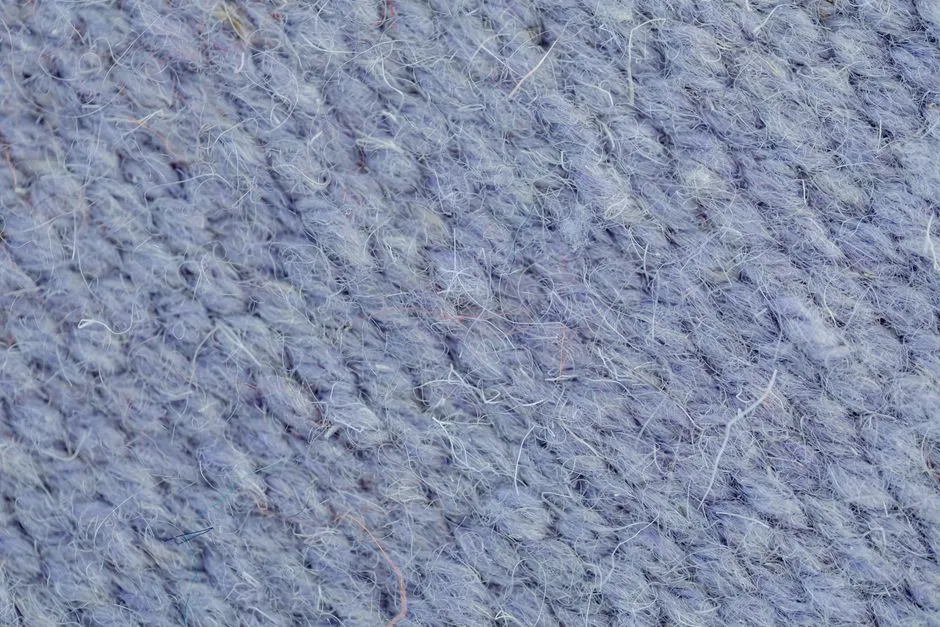
A pale or medium solid color — cream, light gray, soft blue — lets you actually see the V-shape of each knit stitch and the bump of each purl. Black, navy, and other very dark colors flatten that detail under most household lighting, which makes it much harder to spot a dropped stitch or a twisted stitch before it's rows behind you. Highly variegated or self-striping colorways have the same problem in a different form: the color changes distract your eye from the stitch structure itself. Save the moody dark sweater and the wild variegated shawl for after your first few finished objects.
Wool or Acrylic — Which Should You Actually Start With?
Both are legitimate first choices, and the honest answer depends on what you're optimizing for: acrylic wins on cost and machine washability, wool (especially superwash) wins on forgiveness and how a finished piece feels and blocks. A wool-acrylic blend is a reasonable middle ground if you don't want to choose. For the full tradeoffs — including how each fiber behaves in heat, humidity, and the wash — see our wool vs. acrylic comparison.
What Else You'll Need Alongside Your First Yarn
Yarn is only half the beginner shopping list. Needles sized to your yarn's ball band, a tapestry needle for weaving in ends, and a couple of stitch markers round out the essentials without overbuying gear you won't use yet. Our guide to essential knitting tools for beginners covers exactly what earns a spot in a first project bag and what to skip.
How Much to Buy for a First Project
For a first swatch or small project like a dishcloth, one skein is plenty — most worsted-weight skeins run somewhere in the neighborhood of 170-220 yards, more than enough to practice cast-on, knit and purl stitches, and bind-off with yarn left over. For a scarf or simple hat, buying two to three skeins from the same dye lot (the batch number printed on the ball band) avoids a visible color shift partway through, since dye lots can vary noticeably even within the same colorway.
Two habits save beginners the most grief here. First, buy by yardage rather than by skein count, because two balls labeled the same weight can differ by a hundred yards or more; a pattern that calls for 400 yards of worsted might take two skeins of one brand and three of another. Second, buy the extra skein up front. Dye lots sell through, and matching one later is often impossible — a leftover ball costs a few dollars, while running short six inches from the bind-off can cost the whole project.
If you're not sure how much a specific project needs, it's worth checking our guide to how much yarn you need before you buy rather than guessing and running short mid-project.
A Quick Shopping Checklist
Before you buy, run your pick against this short list:
- Weight: worsted (or "Aran" if worsted isn't available — the two are close enough for a first project)
- Color: solid, light-to-medium tone, not black or heavily variegated
- Fiber: wool-acrylic blend, acrylic, or superwash wool
- Ply: multi-ply strand rather than a loosely twisted single-ply
- Yardage: enough total yards for the pattern, from a single dye lot
- Care label: check whether it's machine washable — useful information even if you plan to hand wash, since it tells you how the fiber was treated
If a yarn checks most of these boxes, it's a reasonable first purchase regardless of brand.
Bottom Line
When two skeins both look plausible on the shelf, the tiebreaker is simple: pick the one whose stitches you'll be able to see and undo. That usually means the smoother, plainer, paler ball rather than the interesting one — a wool-acrylic blend for all-around balance, straight acrylic if budget rules, superwash wool if you want natural fiber from day one.
Expect to rip out your first few inches more than once. That's the actual job of a beginner yarn: to make ripping back cheap, painless, and clearly instructive. Fuzzy, slippery, very fine, and very dark yarns all fail that test, which is why they're worth postponing rather than avoiding forever. Once you can read your own stitches without squinting, the whole shelf opens up.