Essential Knitting Tools: What Beginners Actually Need
The Verdict: What You Actually Need to Start
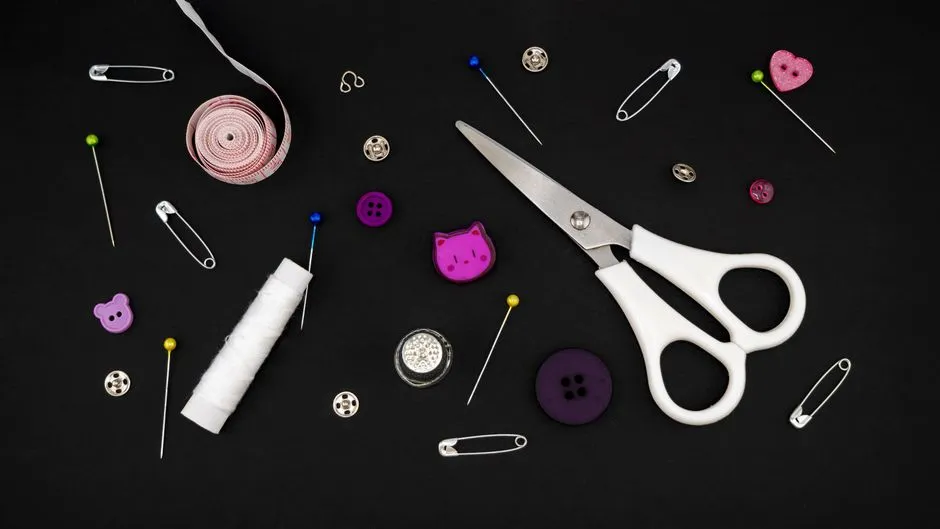
A working knitting kit costs less than you'd think. Five things get a beginner through their first project: a pair of needles sized for the yarn, sharp scissors, a blunt tapestry needle for weaving in ends, a handful of stitch markers, and a flexible tape measure. Everything else on the notions wall is either a convenience you'll want later or a solution to a problem you don't have yet.
We sorted the knitting aisle into three tiers: essential (buy before you cast on), nice-to-have (buy once you know you're sticking with it), and skip for now (tempting, but not worth the money on project one). The criteria throughout: how often a beginner actually reaches for the tool, whether a household substitute does the same job, and whether the cost is justified by what it solves.
The Essentials: Buy These First
Needles sized for your first yarn
Your needle size should match your yarn weight and pattern gauge, not the other way around. If you're starting with a worsted weight yarn — the most common beginner choice — you're generally looking at a needle in the US 7 to 9 range (4.5mm to 5.5mm). A single pair of straight needles or one circular needle in that range covers most first projects: swatches, scarves, dishcloths, simple hats.
Worth knowing: a lone pair of straights only gets you through flat projects. The moment you want a hat or a top-down sweater, you need to knit in the round — and a circular needle (or a set of double-pointed needles) is the usual answer. If you're unsure what you'll knit next, a mid-size circular is the more flexible first purchase, since it handles flat knitting too. For the full breakdown of which size pairs with which yarn, see our needle size conversion chart.
A small, sharp pair of scissors
Any sharp, small-bladed scissors will cut yarn cleanly. Fabric shears work but are bulky for a project bag; embroidery or folding scissors are the more practical choice for portability.
Worth knowing: dull household scissors fray yarn ends instead of cutting them cleanly, which makes weaving in tidy tails harder. This is one place where spending a little more on a genuinely sharp pair pays off immediately.
A blunt-tip tapestry needle
Also called a yarn needle or darning needle, this is what you use to weave in ends and sew seams. The blunt tip is the whole point — it slides between stitches instead of splitting the yarn.
Worth knowing: a mid-size tapestry needle, commonly labeled size 16 to 18, handles most worsted and DK weight work. Tapestry needle sizing isn't standardized the way knitting needle sizes are, so the practical test is whether the eye takes your yarn without a struggle. A metal needle holds its shape better over years of use than a plastic one, but plastic is perfectly functional for a beginner budget.
Stitch markers
Small rings or clips that sit on your needle to flag a specific point in a pattern — the start of a round, a decrease point, a pattern repeat. Locking markers (which open and close like a tiny safety pin) can also mark a spot mid-row, not just between stitches.
Worth knowing: a set of plain jump rings or even scrap yarn tied in loops does the same job as a boutique marker set. Buy the inexpensive version first; upgrade to decorative markers only if you want to.
A flexible tape measure
Used to measure gauge swatches, garment length, and yardage as you knit. A soft fabric or vinyl tape measure is standard; a rigid ruler works for gauge swatches but not for measuring a curved or worn garment.
Worth knowing: accuracy matters more than the tool itself. A stretched-out tape measure gives a false reading, which throws off gauge — and gauge is one of the most common reasons a first sweater doesn't fit. If gauge is new territory, our guide to measuring and matching knitting gauge is a good next stop before you buy yarn for a bigger project.
Essentials at a Glance
| Tool | Typical cost | Why it's essential | Honest drawback |
|---|---|---|---|
| Needles (1 pair/set, sized to yarn) | $5-$15 | Nothing knits without them | Single size limits you to one gauge until you buy more |
| Small sharp scissors | $3-$10 | Cutting yarn and trimming tails | Fabric shears are overkill and bulky to carry |
| Tapestry needle | $2-$6 for a set | Weaving in ends, seaming | Easy to lose — buy a few at once |
| Stitch markers | $3-$8 | Tracks pattern points, rounds | Decorative sets cost more with no functional gain |
| Tape measure | $2-$5 | Gauge and garment measurements | Stretched tape gives false gauge readings over time |
Prices vary by retailer and region; treat these as rough starting ranges, not fixed costs.
Nice-to-Have: Useful Once You're Hooked
These earn their keep after your first project or two, once you know knitting is sticking. Most have a substitute that costs nothing, which is why none of them belong in a first-project budget:
| Tool | When it earns its place | Free or cheap substitute |
|---|---|---|
| Stitch holder | A pattern tells you to park live stitches and come back to them | Scrap yarn threaded through the stitches on a tapestry needle |
| Row counter | Long repeats you keep losing your place in | Tally marks on paper or a note on your phone |
| Cable needle | Your first cabled pattern | A spare double-pointed needle from an odd-size set |
| Point protectors | Carrying an in-progress project in a bag | Nothing needed if the project stays flat at home |
| Project bag | You knit in more than one room, or on the go | A zip-top bag or any tote you already own |
| Blocking mats | You start finishing garments you want to shape and set | Towels over a spare bed, or foam floor tiles |
Blocking mats are the one item here worth planning a real purchase around rather than improvising forever — our guide to blocking mats covers what to look for when you get to that point.
Skip for Now: Tempting but Unnecessary
- Interchangeable needle sets. A genuinely great long-term investment, but a large upfront cost for someone who doesn't yet know which needle materials and cable lengths they prefer. Start with one or two single pairs.
- Yarn swifts and ball winders. These speed up prepping yarn from a hank, but most beginner yarn already comes in ready-to-knit pull skeins or balls. Wait until you're buying yarn on hanks regularly.
- Elaborate notion kits. Pre-packaged kits often bundle items you won't use (stitch counters in three styles, decorative markers, multiple needle sizes) at a premium over buying the few things you need individually.
- Specialty gauge tools beyond a ruler. A basic ruler or tape measure and a swatch are all you need to check gauge; dedicated gauge-checking gadgets solve a problem a ruler already solves.
Common First-Kit Mistakes
A few patterns show up again and again in beginner first-kit shopping:
- Buying needles before choosing yarn. Committing to a needle size first leaves you hunting for a yarn that happens to suit it, which narrows your options to whatever's on the shelf at that gauge.
- Over-buying stitch markers. A single project rarely needs more than 10-15 markers. Large decorative sets look appealing but sit unused past the first few.
- Skipping scissors and improvising with whatever's nearby. Kitchen shears, nail clippers, and teeth all technically cut yarn, but a crushed or chewed end is fiddly to thread onto a tapestry needle when it's time to weave it in.
- Assuming every notion is required on day one. Pattern instructions sometimes list every tool a designer personally likes to use, not the minimum needed to complete the piece. Cross-reference against the essentials list above before you buy.
Reading the Room: What Your First Pattern Actually Requires
Before buying anything, read through your chosen pattern's materials list once, start to finish. Patterns typically separate true requirements (needle size, yarn weight, a handful of notions) from designer preferences (a specific brand of marker, an optional embellishment). If a pattern calls for a tool that isn't on the essentials list above and you're not sure why, it's worth checking whether a substitute — scrap yarn instead of a stitch holder, a safety pin instead of a locking marker — will do the same job for your first attempt.
This also matters for gauge: your pattern will specify a gauge (stitches and rows per 4 inches or 10cm) that assumes a particular needle size and yarn weight combination. If your tension runs looser or tighter than average, the needle size on the pattern's materials list is a starting point, not a guarantee — you may need to go up or down a size to match. That's a swatch-and-measure problem more than a shopping problem, but it's worth knowing before you buy a single needle size and assume it's final.
Building a Starter Kit on a Budget
If you're buying everything at once, prioritize in this order: needles sized correctly for your first yarn and pattern, scissors, a tapestry needle, stitch markers, and a tape measure. That covers every beginner project without a single unnecessary purchase. Once you've picked your first pattern, double-check that your needle size actually matches the yarn's recommended gauge — a mismatch between needle size and yarn weight is one of the most common reasons a first project turns out too stiff, too loose, or the wrong size entirely.
From there, let your next few projects tell you what to add. A hat will nudge you toward a circular needle or a set of DPNs if you don't have either; a sweater will make a row counter feel worth the few dollars; a finished garment will make blocking mats worth the shelf space. Buying reactively, project by project, keeps your kit lean and makes sure everything in it actually gets used. For guidance on choosing that first yarn to go with your new tools, see our picks for best yarn for beginners.